
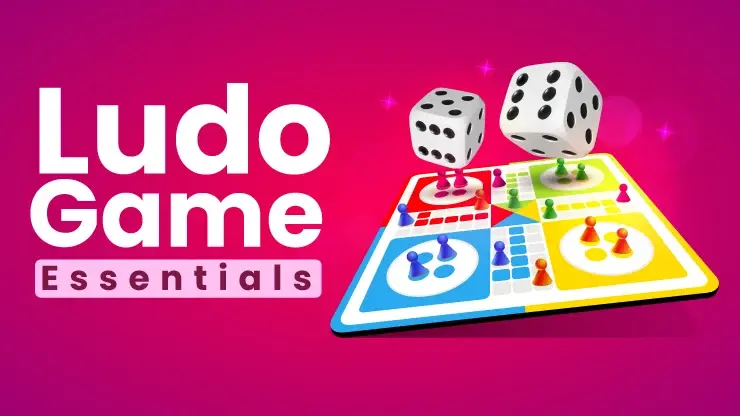
Ludo is a common game in homes worldwide, associated with strategy, enjoyment, and family time. It is derived from the ancient Indian game Pachisi and has grown to become one of the most-played board games in the world. Players of all kinds can enjoy it because of its simple rules and entertaining gameplay. Even though the regulations can seem straightforward, the experience can be significantly enhanced by having the appropriate gear.
This in-depth guide examines the necessary and optional Ludo equipment for playing, looking into contemporary substitutes, and offers upkeep advice to maintain your set in great shape.
Essential Ludo Equipment You Need to Play
It’s essential to have the proper equipment to play Ludo. These components comprise the game’s core and guarantee a fun and seamless experience.
1. Ludo Board
The most essential equipment required to play the game is a board, where all the action occurs.
Types of Boards
- Standard – The most often used boards are composed of sturdy cardboard. They are ideal for recreational play, lightweight, and simple to assemble. However, you can also make a board at home by considering proper dimensions and markings.
- Wooden – Wooden boards are a common option for a more upscale vibe. They are durable, strong, and frequently utilized in competitive environments.
- Cloth – It’s easy to store and transport these folding boards.
- Glass or Acrylic – Luxurious and ornamental, glass or acrylic boards are frequently used as presents or collector’s goods.
Sizes & Dimensions
The boards come in a range of sizes to accommodate various demands.
- Compact Boards – Perfect for travel or tiny areas, around 8 by 8 inches.
- Standard Boards – These offer enough room for comfortable games, usually 12×12 to 18×18 inches.
- Oversized Boards – These are ideal for themed events or group play because they measure more than 20 by 20 inches.
Design Variations
Traditional boards include four colours—yellow, blue, green, and red, with simple, symmetrical designs. However, contemporary boards are available in various themes, including cartoon characters, sports themes, or unique designs featuring family photos or original artwork. For instance, Zupee’s free ludo online games can be played on IPL-themed boards.
2. Ludo Tokens (Pieces)
Players must move tokens, which are little, vibrant objects, across the board to cross the finish line. They stand for the strategy and advancement of every player.
Types of Tokens
- Plastic – These are the most widely used tokens and are inexpensive and lightweight.
- Wooden – Popular in high-end sets, wooden tokens are both aesthetically beautiful and long-lasting.
- Metal – Heavy and luxurious metal tokens are frequently found in expensive sets.
Sizes & Dimensions
Standard tokens are made to fit comfortably inside the board’s squares and have a 1-2 cm diameter. Tokens can be as large as 3 cm for a more noticeable appearance.
Design Variations
Traditional tokens have a solid colour and a disk or cylindrical shape. These days, tokens can be shaped like characters, animals, or themes. Some even have elaborate engravings or glow-in-the-dark.
3. Ludo Dice
Ludo Dice, which decides the game winner, is the common yet crucial equipment required to play the game. The dice, which decide each player’s moves, is the central component of the game.
Types of Dice
- Standard Six-Sided – The most popular kind of six-sided dice, with numbers ranging from 1 to 6.
- Digital – These are electronic dice frequently included in electronic sets like online Ludo.
- Larger – These give the game a playful, tactile touch, especially for amateur Ludo players.
Sizes & Dimensions
Oversized dice can be as big as 25mm (1 inch), while standard dice are about 16mm (0.63 inches). Travel sets benefit significantly from small dice, about 10mm (0.39 inches).
Design Variations
Transparent plastic, carved wood, and even LED-lit dice are among the materials, colours, and patterns that are available. Some dice have thematic designs that complement the aesthetics of the board.
Optional Accessories for Enhanced Ludo Experience
Optional accessories can elevate the game, making it more convenient, exciting, and engaging.
1. Dice Cups or Rollers
A good way to guarantee controlled rolls and equitable games is with dice cups or rollers.
- Features – To stop dice from rolling off the table, dice cups are made of sturdy plastic, leather, or silicone. Often, rollers have built-in trays for convenience.
- Benefits – These accessories are beneficial during competitive gaming by promoting professionalism and guaranteeing fairness.
2. Storage Cases for Tokens and Dice
Keeping your set tidy and guarding against loss or damage can be achieved with the proper storage methods. Here are the types:
- Simple Pouches: Economical and portable.
- Premium Boxes: Metal or wood cases with separate spaces for every item.
Storage boxes guarantee that no pieces disappear between games and make it simple to transport your Ludo set.
3. Timer or Sandglass
Timers can give the game more energy and a sense of urgency. By limiting the time each player has to make decisions, timers can promote faster gameplay and more concentration. Here are some options:
- Digital Timers – Accurate and simple to operate.
- Traditional Sandglasses – These come in different time durations and have a vintage vibe.
Modern Alternatives to Traditional Ludo Equipment
Ludo is now more accessible and adaptable because of new ways to play it, which are made possible by modern technologies.
1. Electronic Boards
The classic game is given a futuristic twist with electronic boards.
- Features – LED indications, sound effects, and digital dice are frequently integrated into these boards. Some even incorporate added functionality with mobile apps.
- Benefits – These boards remove the need for actual tokens and dice while preserving the essential gaming elements, making them ideal for tech-savvy players.
2. Magnetic Boards for Travel
Ludo is best played on magnetic boards when you’re on the go.
- Features – Even while moving, these boards and tokens remain in place thanks to their magnetization.
- Benefits – Magnetic boards guarantee continuous gameplay in vehicles, trains, or airplanes, making them ideal for travelers.
3. Online Board
You can now enjoy the game digitally on your phone and joining exciting matches anytime.
- Features – Online tournaments, multiple game modes, fair gameplay, and automatic scoring.
- Benefits – Online Ludo offers unparalleled accessibility and simplicity by doing away with the requirement for physical equipment. It is ideal for people who prefer to play on PCs, tablets, or smartphones.
Maintenance Tips for Ludo Equipment
To keep your Ludo set fair and long-lasting, you must maintain it.
1. Cleaning and storing your board and tokens
- Cleaning – After every usage, wipe the board and tokens with a gentle, moist cloth. Mild soap can remove tough stains but don’t saturate the objects.
- Storage – Keep the board flat and the dice and tokens in a special case or pouch to avoid warping.
2. Ensuring Dice Accuracy for Fair Gameplay
- Verify Your Balance – To find biases, test your dice frequently by rolling them several times. Dice with persistent anomalies should be replaced.
- Storage – Keep dice in a flat, secure place to avoid damage or distortion.
Online gaming apps offer the advantage of zero maintenance. You don’t have to maintain a board when playing online.
Wrapping Up
Ludo has been loved for generations as a game of skill, strategy, and fun. To enjoy it fully, you just need the right board, dice, and tokens. Today, you can also explore modern options like online versions and app-based play, which make the game even easier to access. This guide will help you set up the perfect experience, whether you’re new or experienced. So, gather your friends and family, roll the dice, and let the fun begin!

