
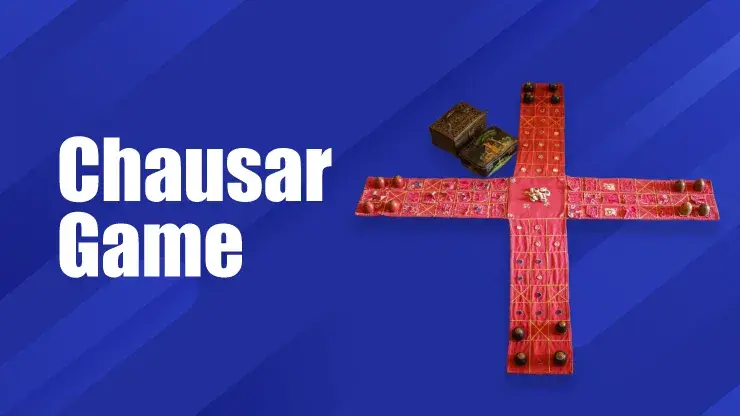
The chausar game is one of the oldest board games from India. It has been played for many centuries. People learned it by watching family members, not from written guides. The game uses a cross-shaped board with marked paths. Players move their pieces along these paths in a fixed direction. The flow is steady and has a clear structure.
Many people know this game because it appears in old stories and historical events. It was played in royal courts and village homes. It shows how people planned, made choices, and handled tense situations. The game also helped families spend time together, so it stayed alive through generations.
You can still find this game in many Indian homes. Some people keep old cloth boards that were passed down in families. Some use wooden boards made by local craftsmen. And many people today see it as a way to stay connected to their roots.
This game also teaches you how to think ahead. You learn to pick the right piece at the right time. You learn how to move safely and avoid risky spots. These small decisions shape the progress of each turn. And that is why the game feels meaningful even now.
- History and Origins of the Chausar Game
- Understanding the Chausar Game Board
- Components of the Chausar Game
- Rules and Flow of the Chausar Game
- Chausar Game: Strategy and Decision-Making
- Chausar Game vs. Chaupar Game vs. Pachisi
- Cultural and Social Importance
- The Chausar Game in Modern Times
- How to Start Playing Chausar Today
- The Lasting Place of the Chausar Game
History and Origins of the Chausar Game
The chausar game has a long and steady history in India. People played it in homes, in courts, and in community spaces. It was part of a broader group of indian board games that relied on planned movement and clear decisions.
The most well-known reference comes from the Mahabharata. The game appears in the story where Yudhishthira plays against Shakuni. This moment is important because it shows how people viewed the game in ancient times. It was not just play. It was also a way to test focus, judgment, and control. The story made the game famous across the country. Families told this part of the epic for generations, and the game stayed alive through these retellings.
Different regions shaped the game in their own way. Some used wooden boards with carved paths. Some used cloth boards that could fold easily. These small changes created related versions. One such version is the chaupar game. It shares many features with the older form. People still compare the two because both follow the same cross-shaped pattern.
The game also traveled with traders and travelers. They carried small boards and shells, so the game reached new towns and villages. Every place made small adjustments, but the core stayed the same. Movement on a cross. A finish point at the center. Clear steps that anyone could learn.
The reason the game survived so long is simple. Families taught it to the next generation. They played it during free time, during festivals, and during long evenings. No written guide was needed. The rules lived through practice. That is why the game still exists today.
Understanding the Chausar Game Board
Chausar uses a cross-shaped board. The design is simple, and each arm of the cross forms a clear path. All players move along these paths in one direction. The board helps players understand how far each piece can go and where each step leads.
Most boards have four long arms. Each arm has marked squares. These squares guide the movement of the pieces. The center area is the final point where all pieces must reach. This layout is steady and does not change across regions. But the artwork and colors may differ from place to place.
Some players use wooden boards. These boards are carved by hand, so the surface feels smooth. Others use cloth boards. These are easy to fold and carry, and many families still use them. Cloth boards were common in older times because people could travel with them. Wood became more common later as the game grew in homes.
There are small differences when you compare this layout with the chaupar game. Chaupar may use a longer path or slightly different markings. But the logic stays the same. A cross. Four arms. A center that acts as the final target. This makes the two games easy to compare and easy to learn.
The structure of the board also explains why people link the game with old dice games. The layout supports step-based movement. Each step depends on the value you get on your turn. So the board and the movement system work together. And that design has stayed unchanged for many years.
The game’s board is simple. But it offers many choices on every move. This balance keeps the game clear and steady. And it prepares the ground for the rules that follow in later sections.
If Chausar interests you, you can explore its modern form through free ludo variants on Zupee. You can play and win rewards along the way.
Components of the Chausar Game
Every part of the game has a purpose. Each piece supports the flow of movement on the board. When players understand these components, the game becomes easier to follow. And it helps them make better choices during each turn.
Pawns
Each player uses a fixed set of pawns. The number is usually four. These pawns start outside the track. A pawn enters the track only when the player gets the correct value on the turn. The pawn then moves along the path in a set direction. The movement is steady and follows the exact marking on the board. Pawns also show how entry, travel, and exit work during play. Their position at each stage tells a lot about the next steps.
Counting Tools
Players use cowrie shells or chausar game dice to get movement values. Cowrie shells were used in older times. They were easy to carry and simple to read. Modern sets may include a special dice format that gives the same values. These counting tools decide how far a pawn can travel on each turn. They support the entire movement system. And they create the rhythm of play without adding confusion.
Board Surface
The board’s material changes how the game feels in hand. Some boards are made of wood. They are stable and stay flat on the ground. Cloth boards are also common. They fold easily and are simple to store. The board surface also affects how players place their pawns. A neat surface keeps the pawns steady. That makes the game smooth during long sessions.
Layout Structure
The cross design guides every move. Each arm has marked points that show the exact path. The center square is the final stop. This structure keeps the game organised. It also helps players plan their actions without losing track. The layout is simple. But it still supports deep thought. That is why many people link this game with older skill games played across India.
Rules and Flow of the Chausar Game
The structure of the game becomes clear when you look at the main rules. These steps guide every action on the board. They explain how pieces enter, move, and finish. Players follow these steps from the first turn to the last move. This steady flow keeps the game organised.
Starting the Play
The game begins with each player placing their pawns outside the track. A pawn enters only when the player gets the correct count on the turn. Some groups decide a starting player with a simple throw of the chausar game dice. Once a pawn enters, it follows the track in one fixed direction. These early steps shape the rest of the match. A slow start can push a player behind. A clear start helps them control the early movements.
Movement Steps
Movement follows a set of values. These values decide how many squares a pawn can travel. Players take turns and move one pawn at a time. When a pawn reaches a marked safe spot, it cannot be removed by an opponent. When it stands on an open spot, it is more exposed. These movement details form the base of the chausar game rules. They also show how each turn leads to a new choice. Players must look at the board and decide which piece should move next.
Capturing Rules
A pawn can remove another pawn if it lands exactly on the same square. When this happens, the removed pawn returns to the starting area. It must enter again through the entry value. Safe spots protect a pawn from this. Open spots do not. This part of the chausar game rules brings structure to the movement. It gives clear results for each step. There is no confusion about what happens on contact.
Reaching the Center
When a pawn completes the full path, it enters the final stretch. This path leads to the center square. A pawn must reach this point with an exact count. Each pawn completes the journey one at a time. When all pawns reach the center, the player is done. This ending path is simple. It helps the match finish in a clean and clear way.
Chausar Game: Strategy and Decision-Making
A steady plan helps players move their pawns with purpose. Each turn gives a set of choices. A player can move a new pawn, push a pawn forward, or hold a position. These choices guide the flow of the match. Strategy comes from understanding the board and thinking one or two steps ahead.
Position Control
Position matters on every turn. When a pawn reaches a safe spot, it gains protection. When it is on an open square, it is exposed. Players study the board and aim for positions that reduce risk. This helps them keep their pieces active. It also helps them avoid needless setbacks.
Offensive Movement
There are moments when a direct move can remove an opponent’s pawn. A clean capture interrupts the opponent’s progress. This gives the active player more room on the board. But a capture must be planned. Players look at the path and see if the target pawn is within reach. A quick check prevents mistakes and keeps the move controlled.
Defensive Planning
Not every turn is for attack. Some turns focus on keeping pieces safe. Players may move a pawn to a safe square instead of pushing forward. They may also decide to move a pawn away from a threat. These steps reduce danger. They also help maintain space on the track.
Group Movement
Keeping two pawns near each other helps with control. It makes the path easier to manage. The player can move the front pawn forward or pull back the second pawn. This small pairing makes movement more stable. It also helps maintain steady progress on the board.
Movement Choice
On each turn, a player chooses one pawn to move. This choice is critical. Moving the wrong pawn can open new risks. Moving the right pawn can open new chances. Good players look at the board before they act. They check the distance to safe spots. They check opponent positions. Then they select the pawn that brings the most steady progress.
Chausar Game vs. Chaupar Game vs. Pachisi
These three games share a common base. They all use a cross-shaped path. They all use step-based movement. But they are not the same. Each has its own layout, tools, and small traditions.
Origins
- Chausar: Chausar is one of the oldest board games in India. It appears in early references and traditional stories. The game was common in courts and gatherings. It spread across regions through travel, trade, and storytelling.
- Chaupar: Chaupar developed as a close regional form. It took shape in northern India. The layout stayed similar to Chausar, but the counting tools changed. Many groups in Rajasthan and Uttar Pradesh followed this style.
- Pachisi: Pachisi grew as a more decorated form. It became popular in several kingdoms. The Mughal era also promoted it. The board design became colorful. The rules included team play in many places. This gave Pachisi its own identity.
Board Design Differences
The board for each game has the same cross shape, but the details change.
- Chausar: The board is flat and simple. It has four equal arms. Each arm has marked squares. The center is the final point. The markings are clear and follow a steady pattern.
- Chaupar: The board is often longer. Some versions have wider arms. Some use stitching or hand-drawn lines. The paths may have extra markings that guide movement. These small changes create a different flow.
- Pachisi: The board has bright patterns. Many versions have colored arms. The path squares are often grouped in sets. This gives the board a more decorated look. It also makes the board easy to recognize.
Shell and Dice Differences
- Chausar: Uses cowrie shells or fixed-value tools. The counts come from how shells fall. Each pattern gives a specific number for movement.
- Chaupar: Often uses long wooden dice called “pasa.” These dice give fixed values. They create a different rhythm compared to shells.
- Pachisi: Traditionally uses cowrie shells. The shell values follow a set pattern. Some modern versions use a standard cube, but older styles keep the shell method.
Rules and Flow Differences
- Chausar: Movement follows fixed values. A pawn enters only with the right count. The track is direct. Capturing is simple. Safe squares protect pawns. The center marks the end.
- Chaupar: Movement may be faster because of the wooden dice. The rules often allow more aggressive turns. Some groups use special starting points. The flow feels more active.
- Pachisi: The game often uses teams. Movement is based on combined values from shells. Some squares have special roles. The rules shift slightly across regions.
Cultural and Social Importance
This game has a long presence in social life. People played it during quiet evenings, gatherings, and community events. It created steady interaction without noise or rush. Each turn allowed calm thinking and direct conversation.
The game also acted as a point of connection between generations. Older players taught the steps to newer players. The ideas moved from one period to another. This kept the structure stable even when the world around it changed.
Some groups used the game to pass time during long travel stops. Others played it during seasonal breaks. In both cases, the game gave structure to free time. It also encouraged small discussions about movement, position, and planning.
The layout and flow reflect older ideas of order. Each arm of the board shows a clear path. The center marks a clear end. The design fits many cultural values that focus on calm progress. This is one reason the game stayed relevant across regions.
The game also appears in stories. Many storytellers used it as a symbol. They used it to show planning, timing, and choice. These stories kept the game familiar even for people who did not play often. And this steady presence helped the game stay active in many families and communities.
The Chausar Game in Modern Times
Many people still play the traditional board version. Some use older cloth boards. Some prefer clean wooden boards. The structure is the same in every version. This keeps the game steady and familiar across places.
Modern players also compare older games with popular options they already know. Ludo is one of those games. It appears in many homes and apps. People often search for ludo other names because the game has many variations across regions. This comparison helps players understand how older games shaped the idea of step-based movement.
Zupee also plays a role in this shift. It introduces fast formats of well-known board games. People use it to play simple rounds during breaks. These short sessions help them enjoy old ideas without setting up a full physical board. Many players say that digital formats remind them of the structure they saw in traditional play.
Digital versions and real boards both keep the game alive. Some enjoy the feel of real pawns on a cloth board. Others prefer opening an app and playing a quick round. Both paths support the same idea. A clear track. A calm pace. A planned move.
The game also appears in cultural events and social meets. People explain how the layout reflects older design habits. They show how planning, position, and careful movement shaped the game. These sessions help newer groups interact with old formats in a simple way.
The steady appeal comes from its structure. Each turn offers a clear choice. Each path moves toward the center. This order fits well with people who like slow and thoughtful games. It also gives them a break from fast digital noise.
How to Start Playing Chausar Today
Starting with this game is simple. You only need a board, pieces, and a counting tool. Many markets still sell cloth boards. These boards fold easily and are simple to store. Wooden boards are also common. They stay flat and give a solid surface for steady play.
You can also set up a basic board at home. Draw a cross with equal arms on paper or cloth. Mark small squares along each path. Place a larger square in the center. This layout is enough to start. You do not need perfect lines. You only need clear paths.
Cowrie shells are easy to find in many local shops. If you do not have shells, you can use a cube or small cards with fixed values. The counting tool does not change the flow. It only gives the number needed for each step.
Before you begin, sit with your group and agree on one method for counting. Also agree on movement direction. This keeps the match smooth. A clear agreement avoids confusion later.
Once the pieces and rules are set, play a few short rounds. These early rounds help everyone understand the movement. They also help you see how the path works. With each round, the flow becomes easier to follow.
If you prefer digital play, there are many apps inspired by older board formats. These help you understand the pace without the need for a physical setup. You can shift between digital and physical play whenever you want.
Starting is simple. The board is simple. And the movement is steady. You only need a few minutes to learn the flow. After that, the game becomes a calm and direct experience.
The Lasting Place of the Chausar Game
The chausar game has stayed active across centuries because its structure is clear. The board is simple. The movement is steady. And every turn gives a direct choice. These qualities helped the game move from older times to the present without losing shape.
People still use it in homes, events, and digital spaces. Some like the feel of real boards. Others prefer apps that make the setup faster. Both paths work because the core idea remains the same. A clean track. A calm pace. A clear end point.
This long journey shows how a simple design can last for generations. When a game keeps its purpose clear, it stays alive in many forms. And this steady presence makes the chausar game a lasting part of India’s gaming history.
Disclaimer: The information provided in this article is for educational and informational purposes only. While we aim to present accurate details about the Chausar game—its history, rules, variations, and cultural relevance—the content should not be considered authoritative historical documentation. Regional practices, traditional rules, and gameplay styles may differ. Readers are encouraged to verify details independently and refer to locally accepted versions of the game for precise rules or interpretations.